3-10-13
Simulated Flameout (SFO) Approaches/Emergency Landing Pattern (ELP) Operations/Practice Precautionary Approaches
JO 7110.65BB, Change 3, effective July 9, 2026 · Official text on faa.gov
- Authorize military aircraft to make SFO/ELP/practice precautionary approaches if the following conditions are met:
- A letter of agreement or local operating procedure is in effect between the military flying organization and affected ATC facility.
- Include specific coordination, execution, and approval procedures for the operation.
- The exchange or issuance of traffic information as agreed to in any interfacility letter of agreement is accomplished.
- Include a statement in the procedure that clarifies at which points SFOs/ELPs may/may not be terminated. (See FIG 3-10-15 and FIG 3-10-17.)
- Traffic information regarding aircraft in radio communication with or visible to tower controllers which are operating within or adjacent to the flameout maneuvering area is provided to the SFO/ELP aircraft and other concerned aircraft.
- The high‐key altitude or practice precautionary approach maneuvering altitudes of the aircraft concerned are obtained prior to approving the approach. (See FIG 3-10-15 and FIG 3-10-17.)
- A letter of agreement or local operating procedure is in effect between the military flying organization and affected ATC facility.
- For overhead SFO/ELP approaches:
- Request a report at the entry point.
- Request a report at low key.
- At low key, issue low approach clearance or alternate instructions.
- For straight-in simulation flameout approaches:
- Request a position report from aircraft conducting straight-in SFO approaches.
- At the appropriate position on final (normally no closer than 3 miles), issue low approach clearance or alternate instruction. (See FIG 3-10-16.)
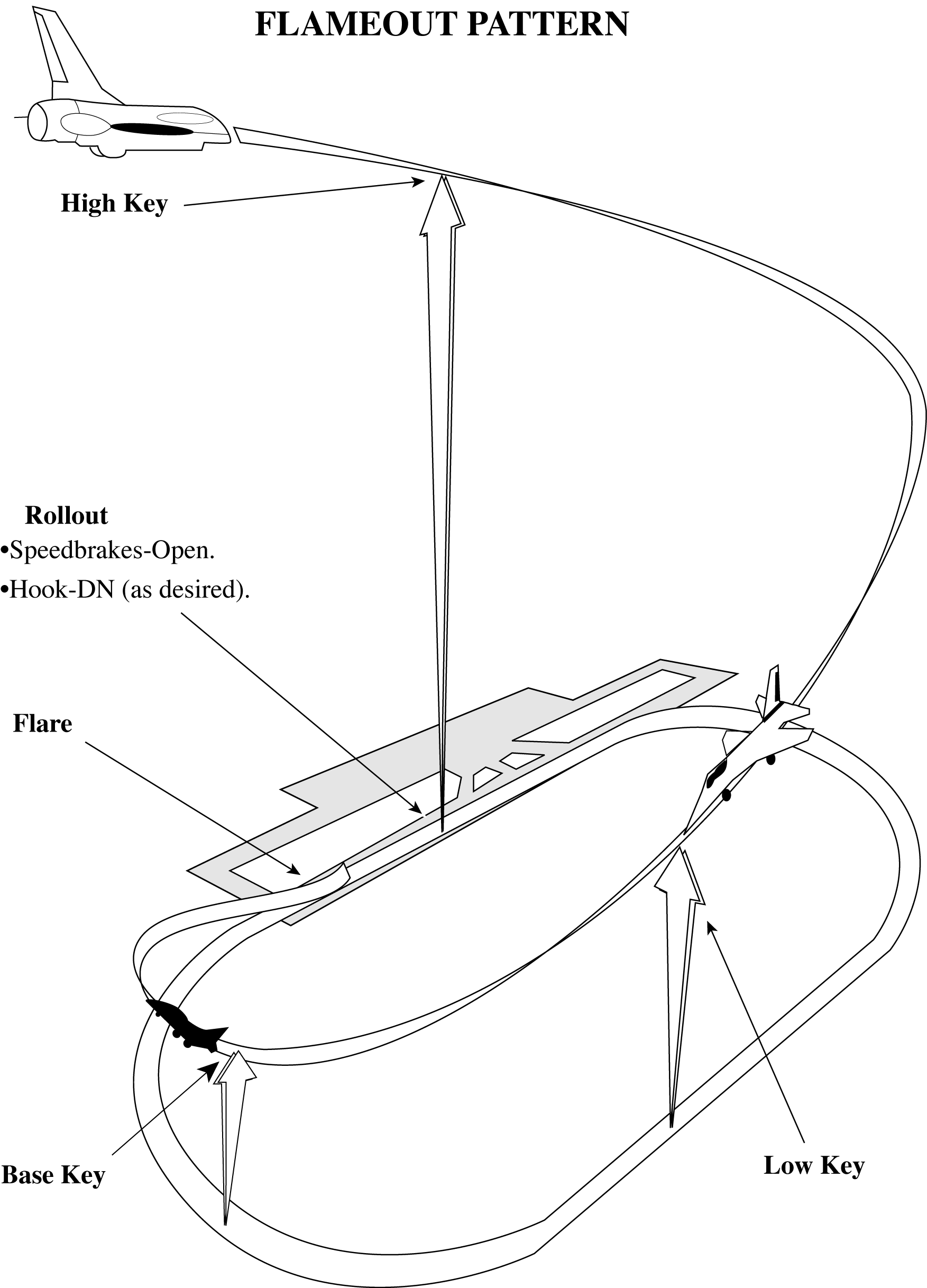
FIG 3-10-15 Simulated Flameout [1] 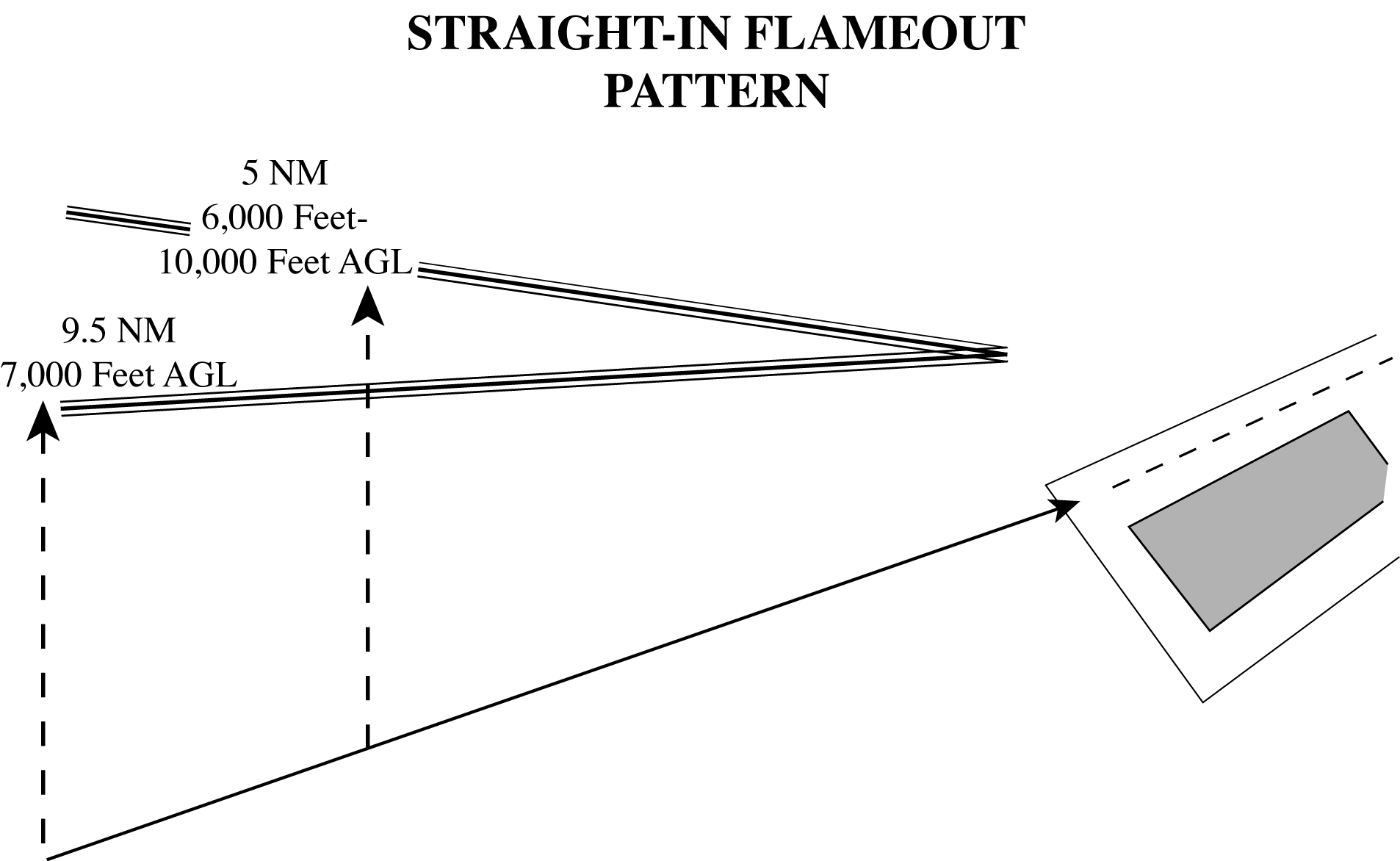
FIG 3-10-16 Simulated Flameout [2] 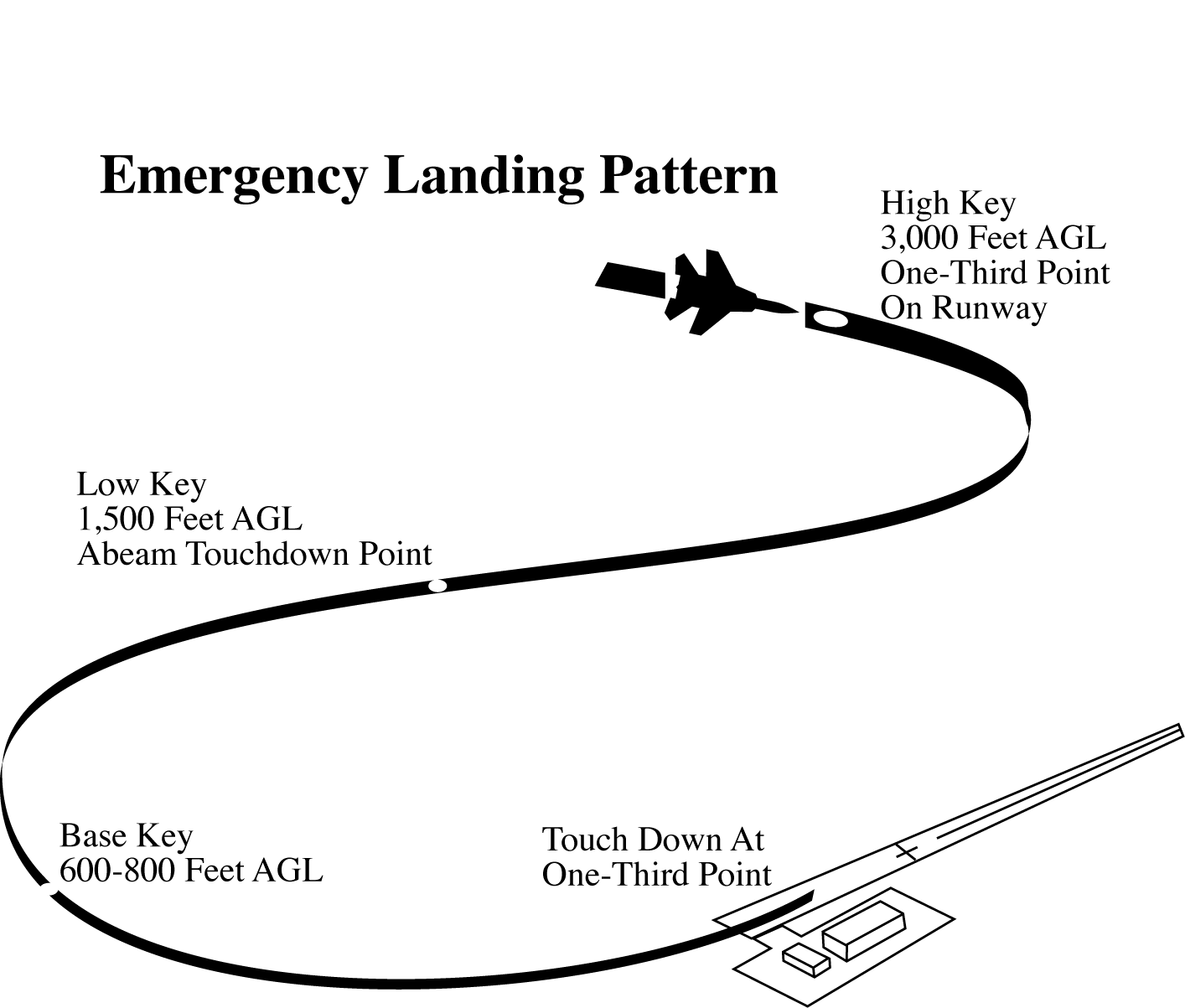
FIG 3-10-17 Emergency Landing Pattern