6-4-2
Minima on Same, Converging, or Crossing Courses
JO 7110.65BB, Change 3, effective July 9, 2026 · Official text on faa.gov
Separate aircraft on the same, converging, or crossing courses by an interval expressed in time or distance, using the following minima:
- When the leading aircraft maintains a speed at least 44 knots faster than the following aircraft - 5 miles between DME equipped aircraft; RNAV equipped aircraft using ATD; and between DME and ATD aircraft provided the DME aircraft is either 10,000 feet or below or outside of 10 miles from the DME NAVAID, or 3 minutes between other aircraft if, in either case, one of the following conditions is met:
- A departing aircraft follows a preceding aircraft which has taken off from the same or adjacent airport. (See FIG 6-4-1.)
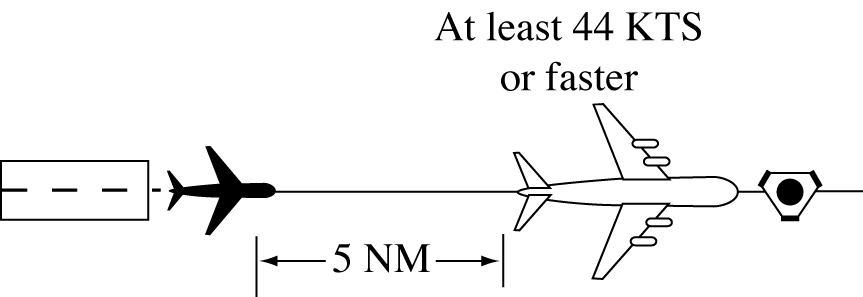
FIG 6-4-1 Minima on Same Course - A departing aircraft follows a preceding en route aircraft which has reported over a fix serving the departure airport. (See FIG 6-4-2.)
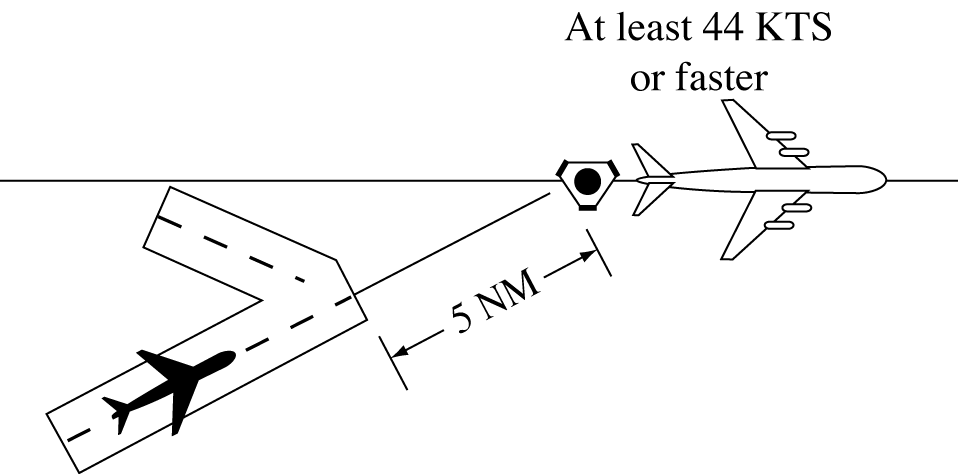
FIG 6-4-2 Minima on Converging Courses - An en route aircraft follows a preceding en route aircraft which has reported over the same fix. (See FIG 6-4-3.)
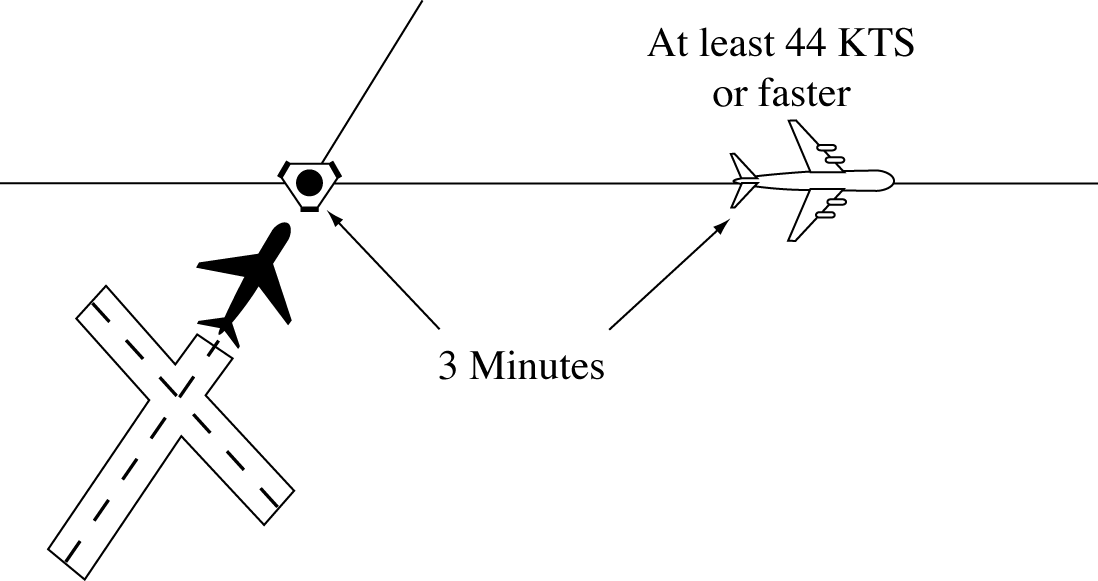
FIG 6-4-3 Minima on Crossing Courses
- A departing aircraft follows a preceding aircraft which has taken off from the same or adjacent airport. (See FIG 6-4-1.)
- When the leading aircraft maintains a speed at least 22 knots faster than the following aircraft - 10 miles between DME equipped aircraft; RNAV equipped aircraft using ATD; and between DME and ATD aircraft provided the DME aircraft is either 10,000 feet or below or outside of 10 miles from the DME NAVAID; or 5 minutes between other aircraft if, in either case, one of the following conditions exists:
- A departing aircraft follows a preceding aircraft which has taken off from the same or an adjacent airport. (See FIG 6-4-4.)
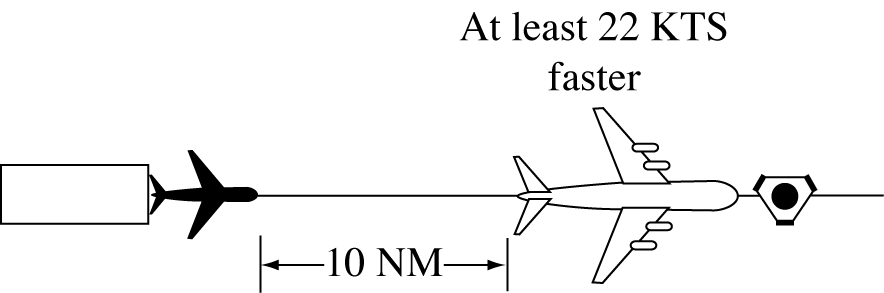
FIG 6-4-4 Minima on Same Course - A departing aircraft follows a preceding en route aircraft which has reported over a fix serving the departure airport. (See FIG 6-4-5.)
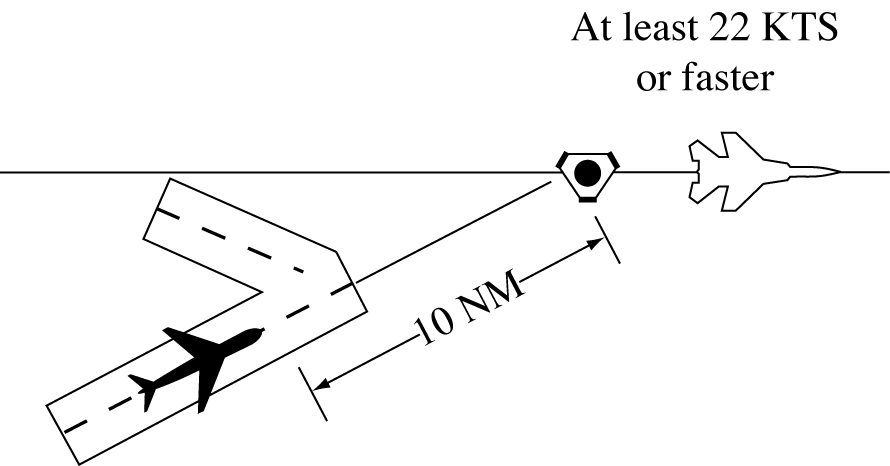
FIG 6-4-5 Minima on Converging Courses - An en route aircraft follows a preceding en route aircraft which has reported over the same fix. (See FIG 6-4-6.)
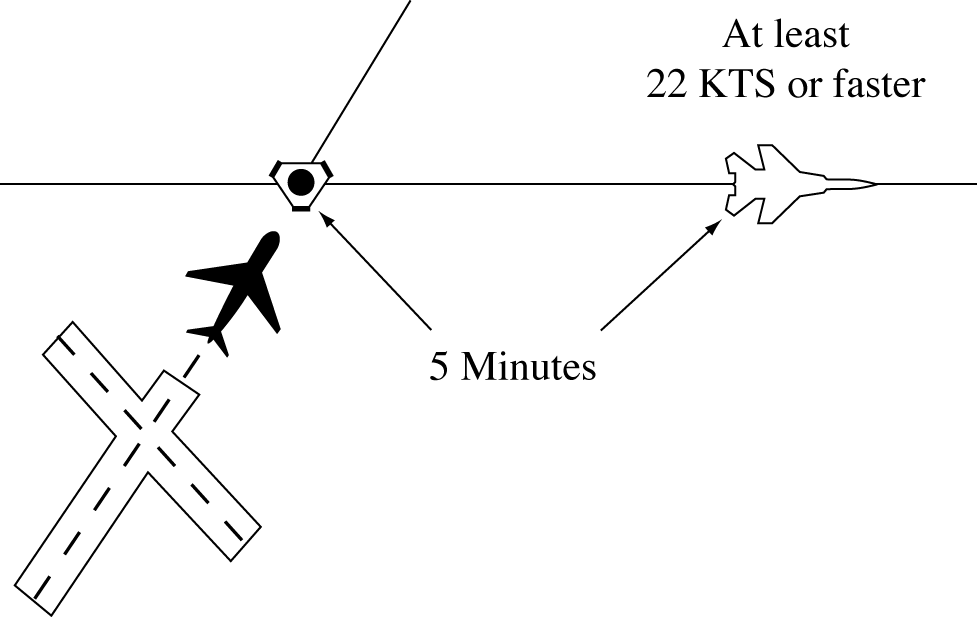
FIG 6-4-6 Minima on Crossing Courses
- A departing aircraft follows a preceding aircraft which has taken off from the same or an adjacent airport. (See FIG 6-4-4.)
- When an aircraft is climbing or descending through the altitude of another aircraft:
- Between DME equipped aircraft; RNAV equipped aircraft using ATD; and between DME and ATD aircraft provided the DME aircraft is either 10,000 feet or below or outside of 10 miles from the DME NAVAID- 10 miles, if the descending aircraft is leading or the climbing aircraft is following. (See FIG 6-4-7 and FIG 6-4-8.)
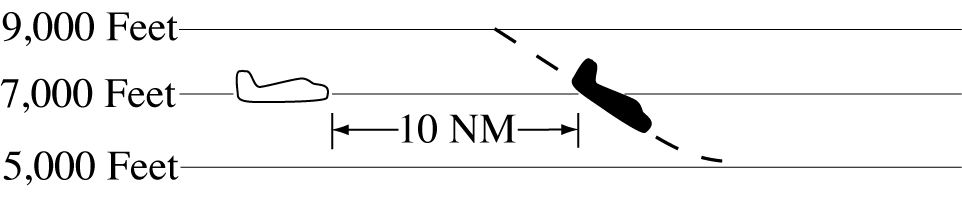
FIG 6-4-7 Descending Through Another Aircraft's Altitude DME Separation 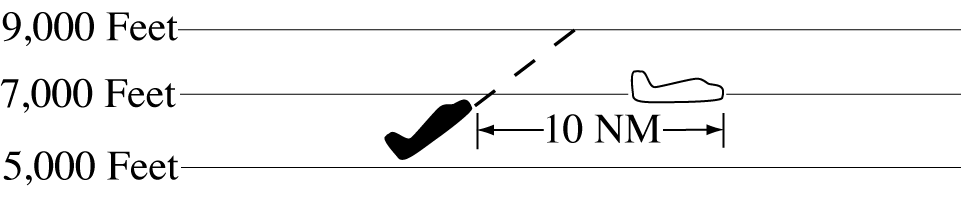
FIG 6-4-8 Climbing Through Another Aircraft's Altitude DME Separation - Between other aircraft- 5 minutes, if all of the following conditions are met: (See FIG 6-4-9 and FIG 6-4-10.)
- The descending aircraft is leading or climbing aircraft is following.
- The aircraft are separated by not more than 4,000 feet when the altitude change started.
- The change is started within 10 minutes after a following aircraft reports over a fix reported over by the leading aircraft or has acknowledged a clearance specifying the time to cross the same fix.
- Between RNAV aircraft that are operating along an RNAV route that is eight miles or less in width- 10 miles provided the following conditions are met:
- The descending aircraft is leading or the climbing aircraft is following.
- The aircraft were separated by not more than 4,000 feet when the altitude change started.
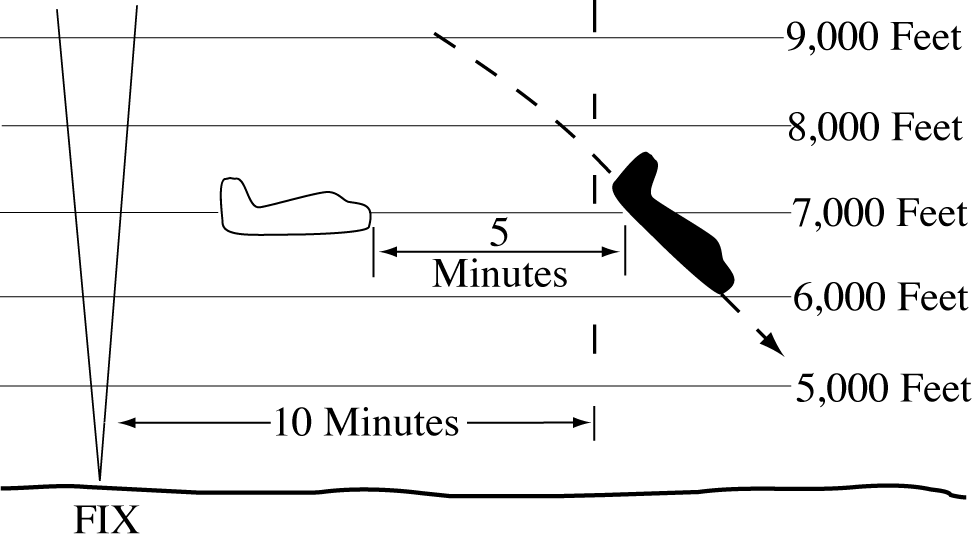
FIG 6-4-9 Descending Through Another Aircraft's Altitude Timed Separation 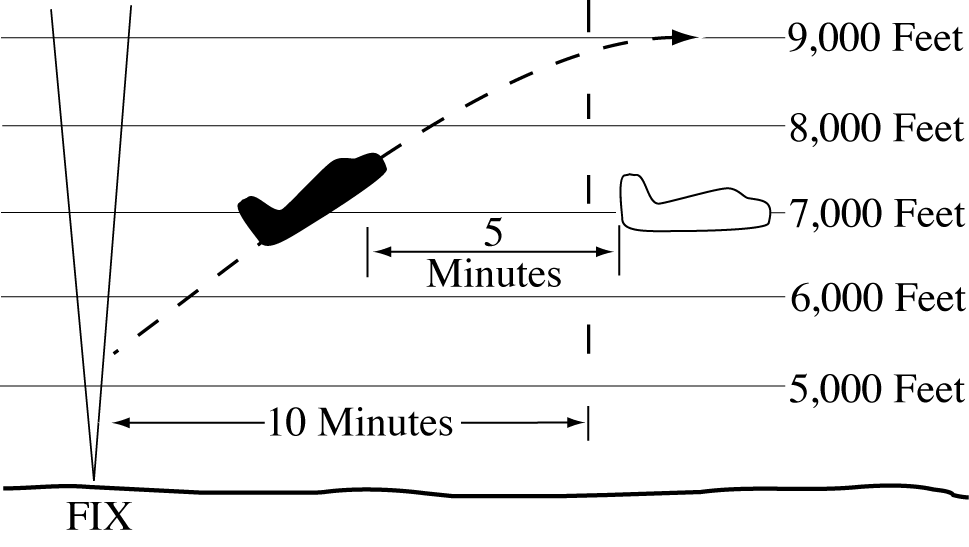
FIG 6-4-10 Climbing Through Another Aircraft's Altitude Timed Separation
- Between DME equipped aircraft; RNAV equipped aircraft using ATD; and between DME and ATD aircraft provided the DME aircraft is either 10,000 feet or below or outside of 10 miles from the DME NAVAID- 10 miles, if the descending aircraft is leading or the climbing aircraft is following. (See FIG 6-4-7 and FIG 6-4-8.)
- When the conditions of subparagraphs a, b, or c cannot be met- 20 miles between DME equipped aircraft; RNAV equipped aircraft using ATD; and between DME and ATD aircraft provided the DME aircraft is either 10,000 feet or below or outside of 10 miles from the DME NAVAID; or 10 minutes between other aircraft. (See FIG 6-4-11, FIG 6-4-12, FIG 6-4-13, FIG 6-4-14, FIG 6-4-15, and FIG 6-4-16.)
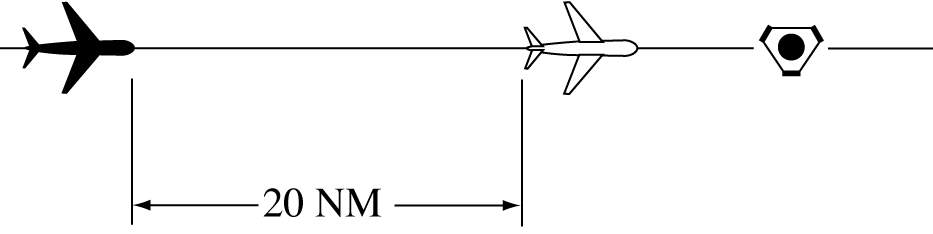
FIG 6-4-11 Minima for Same Course Separation 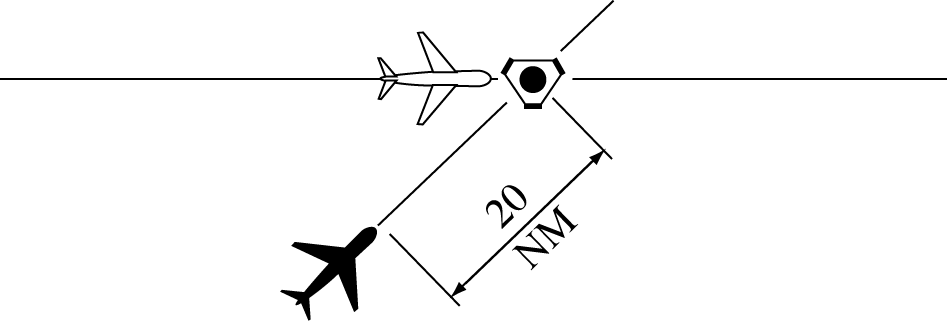
FIG 6-4-12 Minima for Crossing Courses Separation 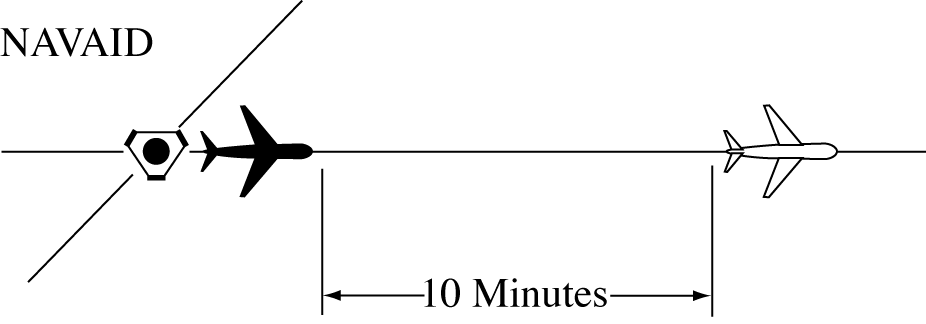
FIG 6-4-13 Minima for Same Course Separation 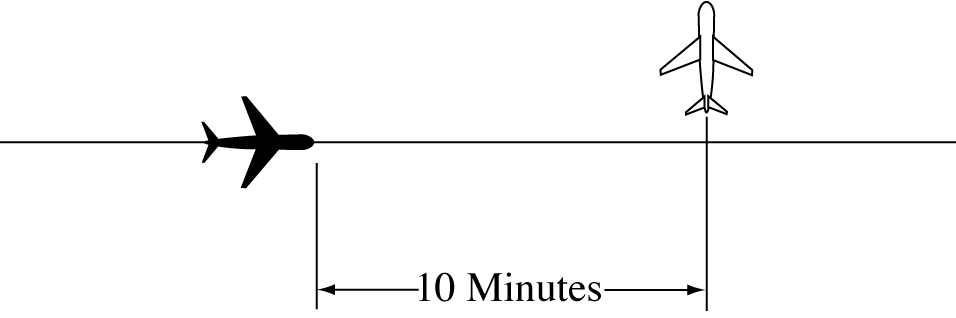
FIG 6-4-14 Minima for Crossing Courses Separation 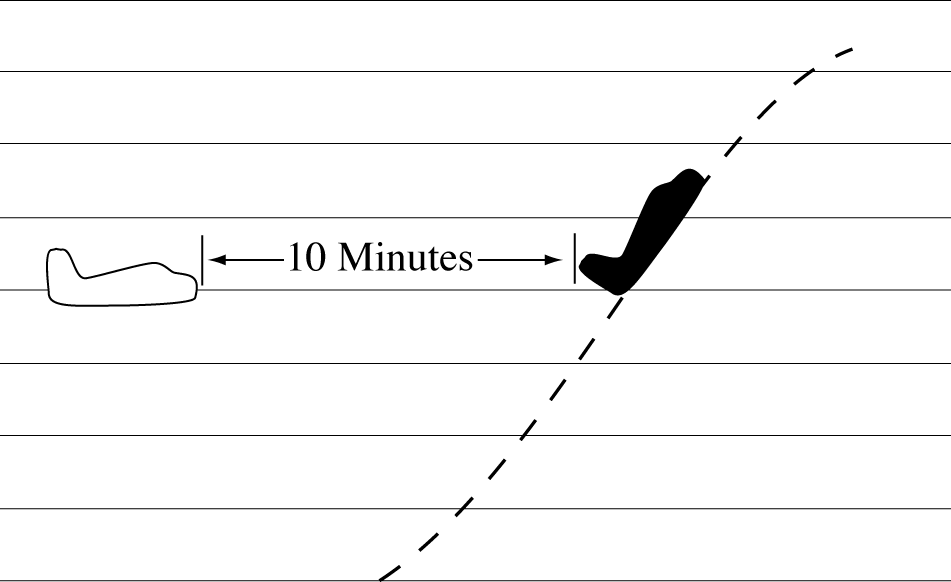
FIG 6-4-15 Climbing Through Another Aircraft's Altitude Separation 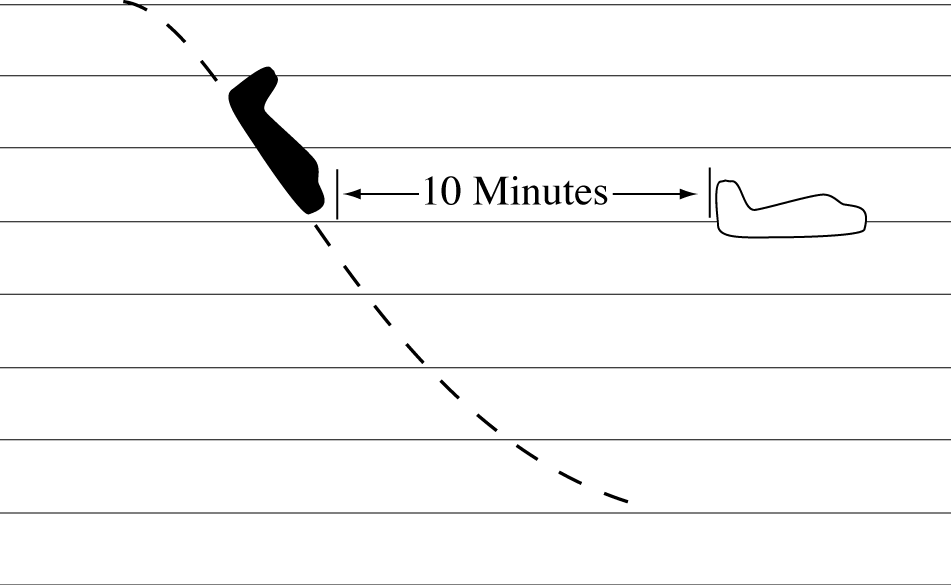
FIG 6-4-16 Descending Through Another Aircraft's Altitude Separation - Between aircraft, when one aircraft is using DME/ATD and the other is not- 30 miles if both the following conditions are met: (See FIG 6-4-17 and FIG 6-4-18.)
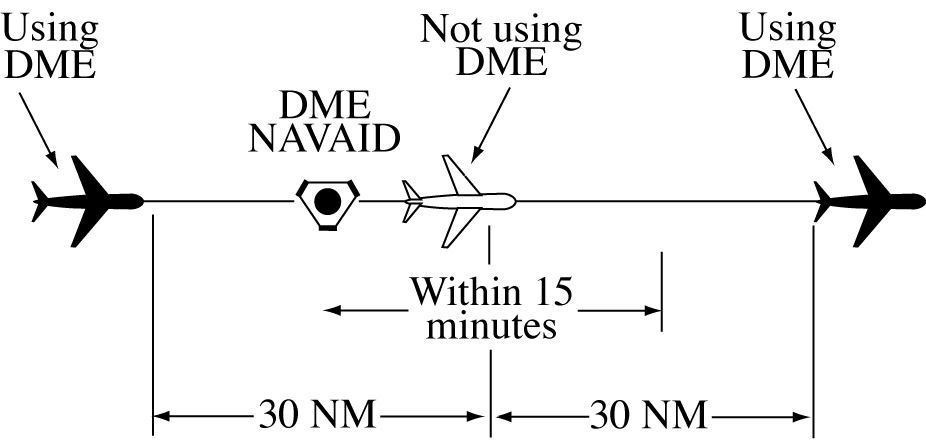
FIG 6-4-17 Minima for Same Course Separation 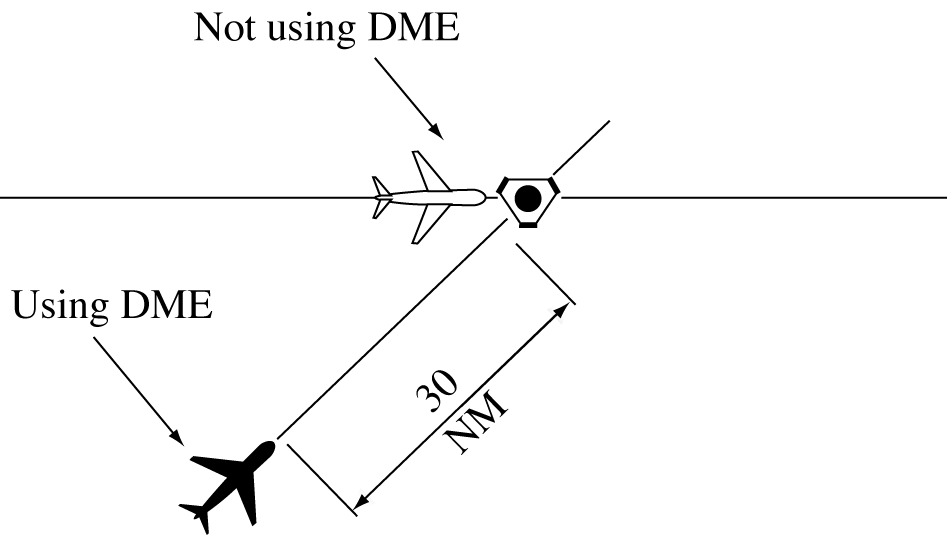
FIG 6-4-18 Minima for Crossing Courses Separation - The aircraft using DME/ATD derives distance information by reference to the same NAVAID or waypoint over which the aircraft not using DME/ATD has reported.
- The aircraft not using DME/ATD is within 15 minutes of the NAVAID.